For questions about financial assistance,
call 1-844-DUPIXENT, option 1 or
click to learn more
WHY DUPIXENT?
Patient Portrayal
KEY
TAKEAWAYS
- DUPIXENT is a prescription biologic treatment for AFRS that helps block two of the key sources of type 2 inflammation.
- DUPIXENT is not a steroid, antifungal, or immunosuppressant.
- In a clinical study, DUPIXENT was evaluated for its impact on sinus imaging scans, nasal congestion, and need for additional sinus surgery and/or oral steroids.
DUPIXENT DELIVERED RESULTS
DUPIXENT was studied in a 52-week clinical trial in 62 adult and pediatric patients aged 6 years and older with AFRS. The safety and effectiveness of DUPIXENT was assessed in AFRS patients who have a history of sino-nasal surgery. During the study, patients were allowed to continue background intranasal corticosteroids.
At Week 52, patients taking DUPIXENT SAW:
Improved sinus imaging results

50% reduction vs 10% reduction on placebo. A lower score on sinus imaging testing could indicate reduced swelling or mucus
Less need for surgery and/or oral steroids

92% reduced need for sinus surgery and/or oral steroids compared to placebo
Reduced nasal congestion

81% reduction of nasal congestion compared to 11% on placebo.
Some patients saw improvements in as early as one month*
Shrunk nasal polyps

Approximately 63% nasal polyps shrinkage compared to 4% on placebo
In as little as 2 weeks
Improved sense of smell

Some patients had an improved sense of smell in as little as 2 weeks†,‡
Don’t stop taking your corticosteroid medicine unless instructed by your doctor.
*Analysis at one month was not evaluated during the clinical trial, and any results at one month may be due to chance. Individual results may vary.
†Analysis at 2 weeks was not evaluated during the clinical trial, and any results at 2 weeks may be due to chance. Individual results may vary.
‡As measured by a patient-reported scratch-and-sniff test that measures the ability to identify different smells.
THE MOST COMMON SIDE EFFECTS FOR AFRS INCLUDE:
- Injection site reactions
- Eye problems, including eye and eyelid inflammation, redness, swelling, itching, eye infection, and blurred vision
- High count of a certain white blood cell (eosinophilia)
- Stomach problems (gastritis)
- Joint pain (arthralgia)
- Trouble sleeping (insomnia)
- Toothache
HOW DUPIXENT WORKS
DUPIXENT helps block two of the key sources of underlying inflammation that
can cause AFRS symptoms

DUPIXENT is not a steroid or antifungal

DUPIXENT is a prescription biologic medicine given under the skin (subcutaneous injection) that is injected every 2 or 4 weeks depending on age and weight

Continuously works between doses to help treat AFRS
HOW SYMPTOMS CAN IMPROVE OVER TIME
Some patients on DUPIXENT can experience an improved sinus imaging scan, potentially
indicating less swelling or mucus, and can have their nasal polyps shrink at Week 52
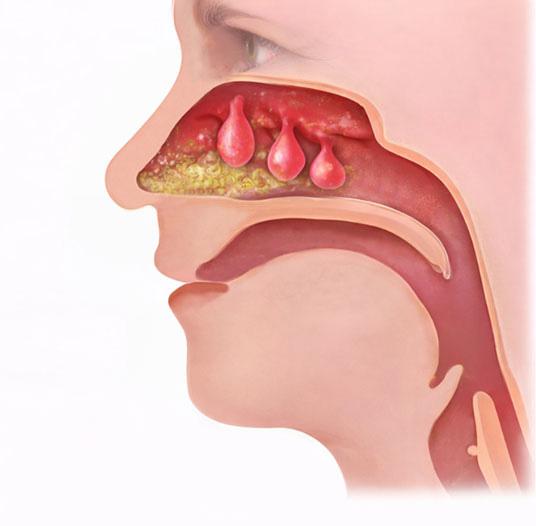
Before treatment
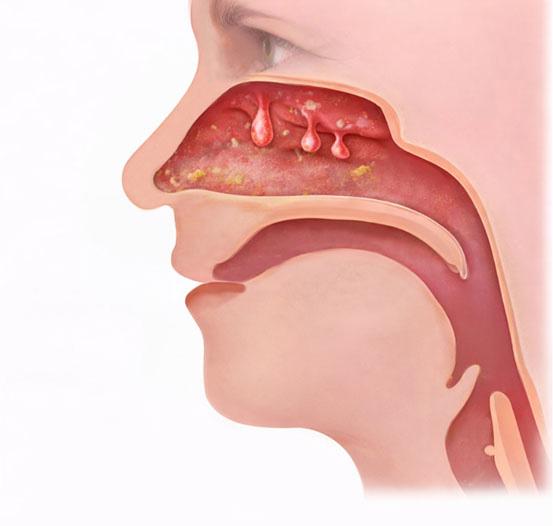
At Week 52 of treatment
For illustrative purposes only. Image represents potential trial results and are not actual patients.

What other information about DUPIXENT would be helpful before talking to your doctor?
Please select one.
Commercially insured patients pay as little as $0* copay per fill of DUPIXENT, and 98% of patients are covered. Learn more about the cost of DUPIXENT.
*Approval is not guaranteed and is subject to the program maximum per patient per calendar year.
Explore Pricing and InsuranceUse DUPIXENT exactly as prescribed by your healthcare provider. Your healthcare provider will tell you how much DUPIXENT to inject and how often to inject it. DUPIXENT is given as a subcutaneous injection every 2 or 4 weeks, depending on age and weight that can be administered at home by you or your caregiver after proper training by your doctor or given by your doctor in a clinic or doctor’s office. Find supplemental tutorials, instructions, and more from our injection support center.
Browse InjectionSupport Center
You’ll need a prescription to get started with DUPIXENT. Answer some questions to prepare for a conversation with a doctor to find out if DUPIXENT may be right for you or your child.
Download Doctor Discussion GuideGet more information straight to your inbox. Sign up to learn more.
Sign Up for EmailsHere are some of the most common questions people
with AFRS ask when they first learn about DUPIXENT:
DUPIXENT is a biologic treatment that can help block two of the key sources of the inflammation in AFRS. It continuously works between doses to help treat the condition.
Surgery can ease symptoms, but people who get surgery may need it again in the future. In people who have already had a history of sinus surgery, DUPIXENT can help treat AFRS and reduce the need for additional sinus surgery and/or oral steroids.*
*DUPIXENT was studied in a 52-week clinical trial in 62 adult and pediatric patients aged 6 years and older with AFRS. The safety and effectiveness of DUPIXENT was assessed in AFRS patients who have a history of sino-nasal surgery. During the study, patients were allowed to continue background intranasal corticosteroids.
In a 52-week clinical trial with 62 patients aged 6 years and older with AFRS, some patients saw improvements in nasal congestion in as early as one month.* Patients experienced an 81% reduction at week 52, compared to 11% on placebo.
*Analysis at one month was not evaluated during the clinical trial, and any results at one month may be due to chance. Individual results may vary.